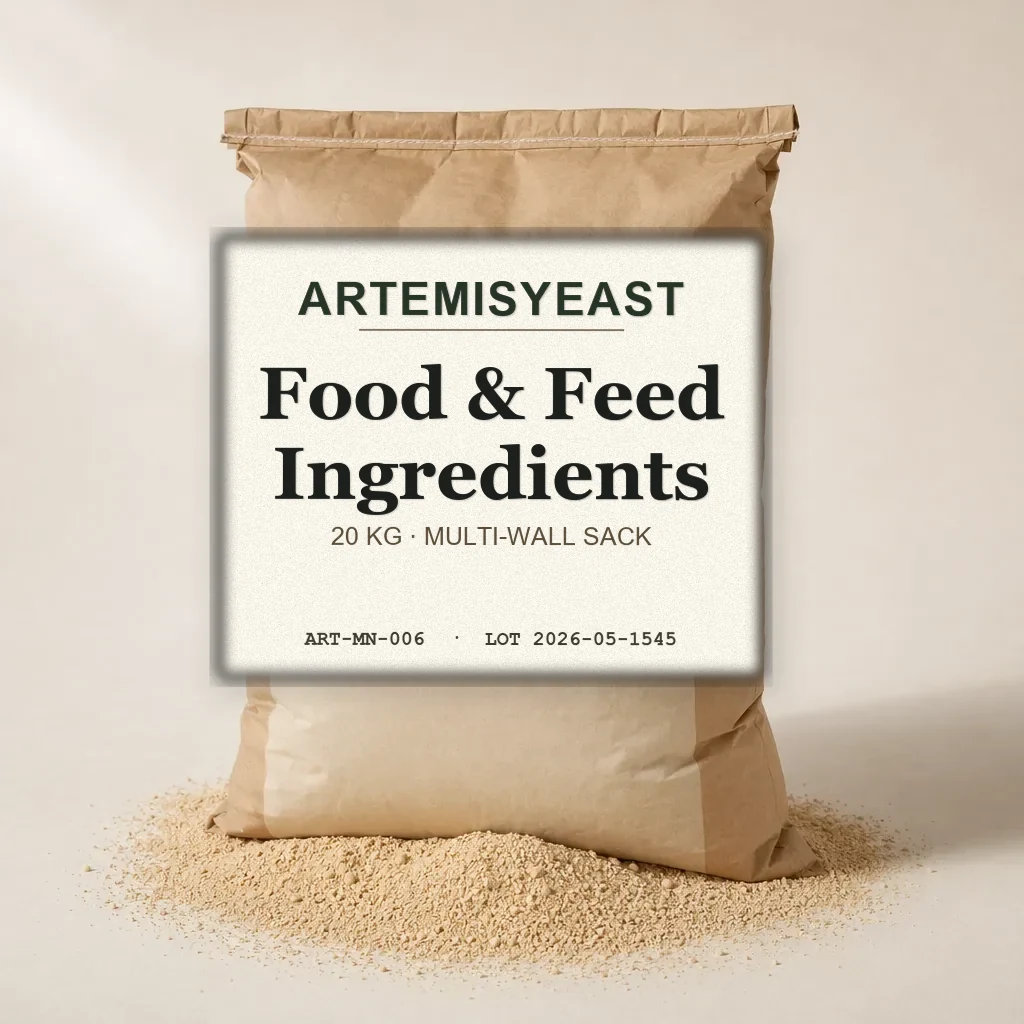
Food and Feed Ingredients for Microbial Fermentation
Food and feed ingredients for microbial fermentation are nutrient inputs used to supply carbon, nitrogen, minerals, vitamins, and growth factors to controlled industrial cultures. ART-MN-019 is supplied by ArtemisYeast for procurement teams formulating media for industrial fermentation, cell culture support, and upstream bioprocess operations. This is an inquiry-only bulk product supplied in 20 kg multi-wall sacks, with wholesale pricing on request and documentation matched to the intended food, feed, or technical application.
- ✓ Free worldwide shipping
- ✓ ISO-aligned manufacturing
- ✓ Certificate of Analysis on request
- ✓ Bulk & custom volumes quoted on request
Overview
ART-MN-019 is a configurable microbial nutrition ingredient matrix for industrial fermentation programs that require consistent, scalable nutrient inputs. The product scope may include yeast-derived solids, hydrolysates, extract-type nutrition, food-grade carbohydrates, mineral carriers, and feed-compatible nutrient components selected according to process requirements. Typical use is as a non-live nutrition input; where live culture inputs are required, CFU/g specification must be defined separately at inquiry stage.
Target specifications are aligned to the selected ingredient base and may include moisture ≤6.0%, protein 45–65% on dry basis for yeast-derived fractions, total nitrogen 7–12%, amino nitrogen 2.5–6.0%, ash 5–15%, pH 5.0–7.0 in solution, and 80 mesh powder as standard unless granulation is requested. For more options in this segment, see microbial nutrition and fermentation ingredients.
Applications
- Industrial microbial fermentation: nitrogen and growth-factor support for bacterial, yeast, and fungal production strains used in food ingredient, enzyme, organic acid, biomass, and metabolite manufacturing.
- Cell culture and upstream media preparation: defined or semi-defined nutrient contribution where yeast-derived peptides, amino nitrogen, minerals, and carbohydrate inputs are specified by R&D teams.
- Food manufacturing fermentation: nutrient supplementation for starter propagation, fermentation yield management, and controlled process scale-up.
- Feed fermentation: input for fermented feed substrates, probiotic biomass production, and microbial conversion systems, subject to local feed-use compliance.
- Process optimization: side-by-side evaluation of nitrogen source, amino nitrogen level, ash contribution, solubility, color, odor, and heat tolerance during pilot trials.
Storage and Handling
ART-MN-019 is packed in 20 kg multi-wall sacks suitable for palletized dry-goods handling. Store unopened sacks in a clean, cool, dry warehouse at 5–25 °C, away from direct sunlight, floor moisture, volatile chemicals, and strong odors. Recommended relative humidity is below 65% because many fermentation nutrients are hygroscopic and may cake when exposed to moisture.
Typical shelf life is 18–24 months from production date when stored in original packaging under recommended conditions; the confirmed shelf life appears on the quotation and certificate package. After opening, reseal promptly and use first-in, first-out inventory control.
Quality and Documentation
Each shipment can be supported with a certificate of analysis covering identity, appearance, moisture, pH, microbiological limits, and other agreed parameters. Additional testing may include total nitrogen, amino nitrogen, protein, ash, mesh size, bulk density, heavy metals, and allergen or GMO-status statements where relevant to the declared ingredient base.
Manufacturing and supplier qualification are managed with HACCP-aligned controls, traceability, and batch documentation. ISO 22000, FSSC 22000, Halal, Kosher, food-grade, feed-grade, and country-specific documents are available on request when applicable to the selected source and facility. Review the ArtemisYeast quality and documentation process before ordering, or submit process targets through request a quote for a bulk quote on request.
About this product
What is the typical shelf life?
Do you offer documentation (CoA, food-grade declaration)?
What is the minimum order quantity?
Is bulk pricing available?
How is this product shipped internationally?
More from Microbial Nutrition & Fermentation
Yeast Powder for Industrial Fermentation Nutrition
Microbial nutrition input — yeast powder-fermentation for industrial fermentation, cell culture, and biopharma upstream.
Bio-Agriculture Microbial Nutrition Input, 20 kg Sack
Microbial nutrition input — bio-agriculture for industrial fermentation, cell culture, and biopharma upstream.
Bio-Chemistry Fermentation Nutrient Blend ART-MN-003
Microbial nutrition input — bio-chemistry for industrial fermentation, cell culture, and biopharma upstream.
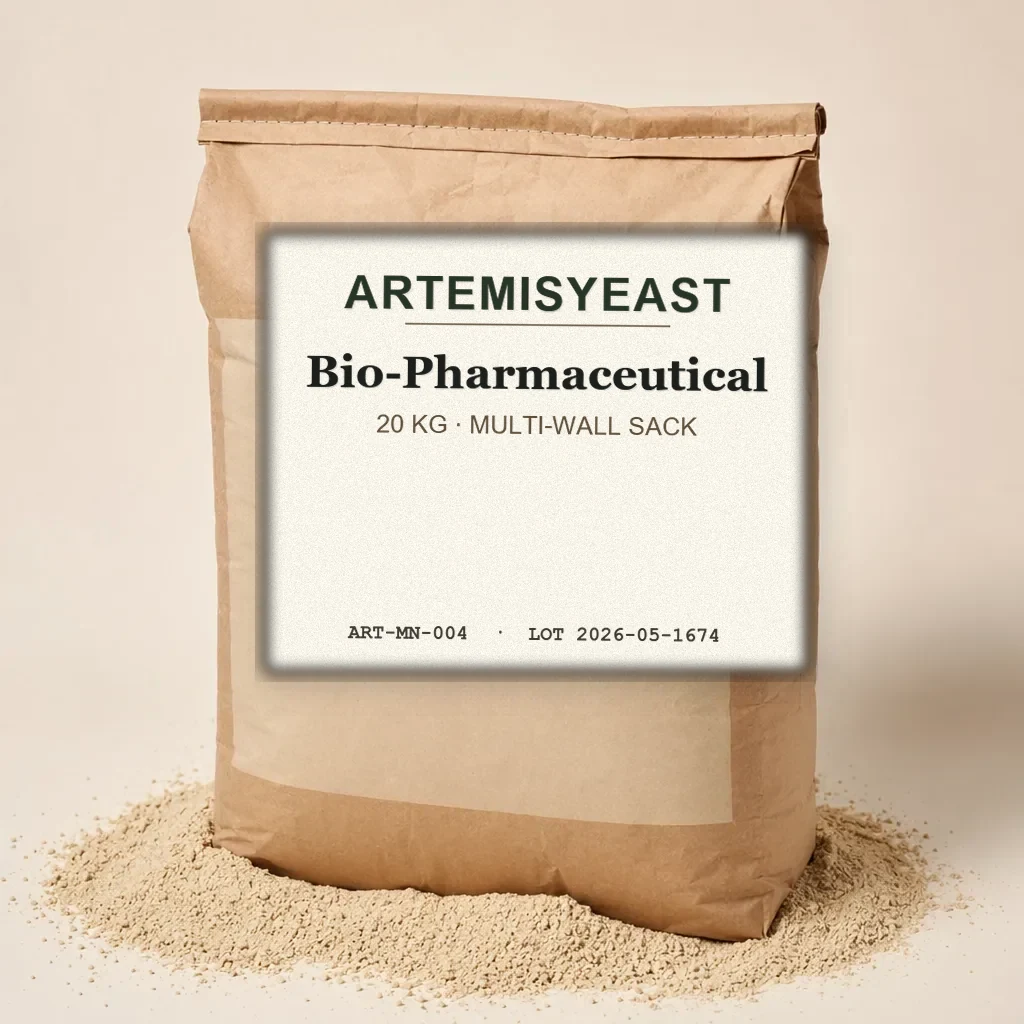
Bio-Pharmaceutical Microbial Nutrition Input, 20 kg
Microbial nutrition input — bio-pharmaceutical for industrial fermentation, cell culture, and biopharma upstream.
Request a Custom Quote
We have received your message. We will reply by email.