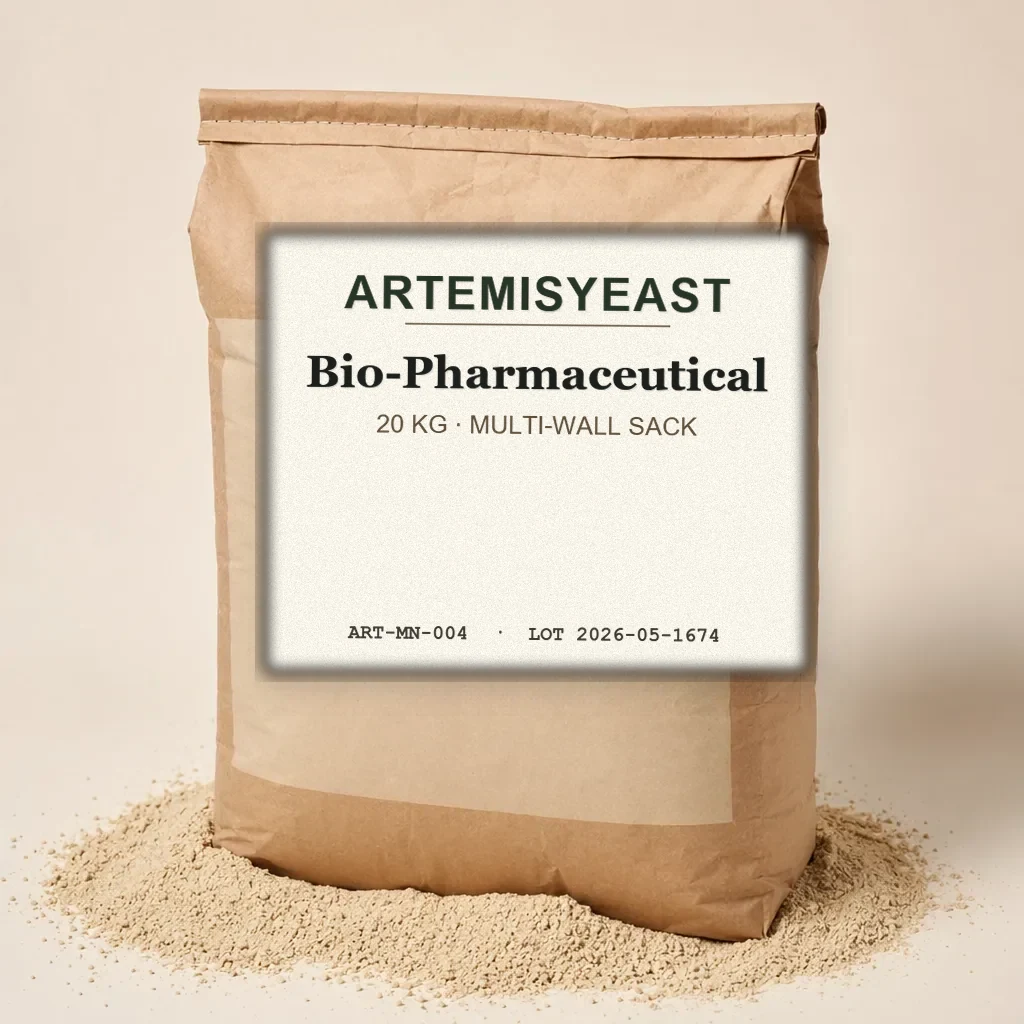
Bio-Pharmaceutical Microbial Nutrition Input
ART-MN-004 Bio-Pharmaceutical Microbial Nutrition is a yeast-derived nutrient input designed to supply amino nitrogen, peptides, vitamins, minerals, and growth factors for upstream industrial fermentation and cell-culture media. It is intended for R&D scale-up, pilot runs, and production procurement where consistent media contribution, lot documentation, and export-ready packing are required. Supplied in 20 kg multi-wall sacks, this inquiry-only item is available with wholesale pricing on request through ArtemisYeast.
- ✓ Free worldwide shipping
- ✓ ISO-aligned manufacturing
- ✓ Certificate of Analysis on request
- ✓ Bulk & custom volumes quoted on request
Overview
ART-MN-004 is a dry, free-flowing microbial nutrition ingredient for upstream processes that require a complex, yeast-derived source of assimilable nitrogen and micronutrients. It is suitable for bacteria, yeast, and selected eukaryotic cell-culture workflows after customer qualification. The product is typically used as a media component rather than as an active culture; it is not specified by CFU/g and should be evaluated within the buyer’s validated media design.
Representative technical targets may include moisture ≤6.0%, total nitrogen 8.0–12.0%, crude protein 50–70% by nitrogen conversion, ash 8–15%, pH 5.0–7.0 in a 2% aqueous solution, and solubility ≥95% depending on grade and lot. Typical particle profile is fine powder, commonly through 80 mesh, packed in a 20 kg multi-wall sack with inner liner. For adjacent inputs, buyers can review our microbial nutrition and fermentation category or submit a bulk quote on request with target organism, media format, and annual volume.
Applications
- Industrial microbial fermentation: nitrogen and growth-factor contribution for enzyme production, organic acid fermentation, biomass generation, recombinant protein expression, and specialty metabolite platforms after in-house process qualification.
- Biopharma upstream development: complex nutrient fraction for screening, seed-train optimization, feed strategy development, and production media where a yeast-derived component is acceptable under the buyer’s quality system.
- Cell-culture media support: used in non-sterile bulk form as a raw material for further processing, filtration, or sterilization by the customer. Compatibility should be verified for osmolality, clarity, endotoxin expectations, and cell-line response.
- R&D and scale-up bridging: appropriate for laboratories and pilot plants seeking consistent 20 kg procurement units before moving to pallet or container quantities.
- Manufacturing cost control: helps procurement teams consolidate nutrient sourcing while maintaining traceable lots, specification review, and wholesale pricing on request rather than public spot pricing.
Storage and Handling
Store sealed sacks in a clean, dry, odor-free warehouse at 5–25 °C, protected from direct sunlight, moisture, condensation, and high humidity. Keep away from volatile chemicals and materials with strong odors. After opening, reseal the inner liner promptly and use the remaining powder as soon as practical to reduce moisture uptake and caking risk. Under recommended storage conditions, typical shelf life is up to 24 months from manufacture, subject to the actual CoA and label statement for the shipped lot.
Handle as a fine food- or fermentation-grade powder using local plant dust-control procedures. Standard precautions include avoiding dust clouds, using grounded transfer equipment where applicable, and wearing suitable respiratory and eye protection during charging. For cell-culture or high-purity fermentation use, the buyer should define any pre-use treatment such as dissolution, clarification, heat processing, or sterile filtration.
Quality and Documentation
ArtemisYeast supports procurement teams with lot-based documentation, including Certificate of Analysis, product specification, allergen statement, non-GMO status where applicable, safety data sheet, packing list, and export documents on request. Manufacturing and supplier controls are reviewed against HACCP-aligned and ISO-style food-safety expectations; documentation for ISO 22000, FSSC 22000, Halal, Kosher, or related programs can be supplied where available for the applicable production site and lot.
Typical CoA parameters may cover appearance, odor, moisture, pH, total nitrogen or protein, ash, solubility, heavy metals, total plate count, yeast and mold, coliforms, and absence criteria for specified pathogens. Additional testing such as bioburden profile, endotoxin screening, amino nitrogen, or trace elements can be discussed before order placement. Buyers can review our quality documentation approach and provide internal acceptance limits for technical matching.
About this product
What is the typical shelf life?
Do you offer documentation (CoA, food-grade declaration)?
What is the minimum order quantity?
Is bulk pricing available?
How is this product shipped internationally?
More from Microbial Nutrition & Fermentation
Yeast Powder for Industrial Fermentation Nutrition
Microbial nutrition input — yeast powder-fermentation for industrial fermentation, cell culture, and biopharma upstream.
Bio-Agriculture Microbial Nutrition Input, 20 kg Sack
Microbial nutrition input — bio-agriculture for industrial fermentation, cell culture, and biopharma upstream.
Bio-Chemistry Fermentation Nutrient Blend ART-MN-003
Microbial nutrition input — bio-chemistry for industrial fermentation, cell culture, and biopharma upstream.
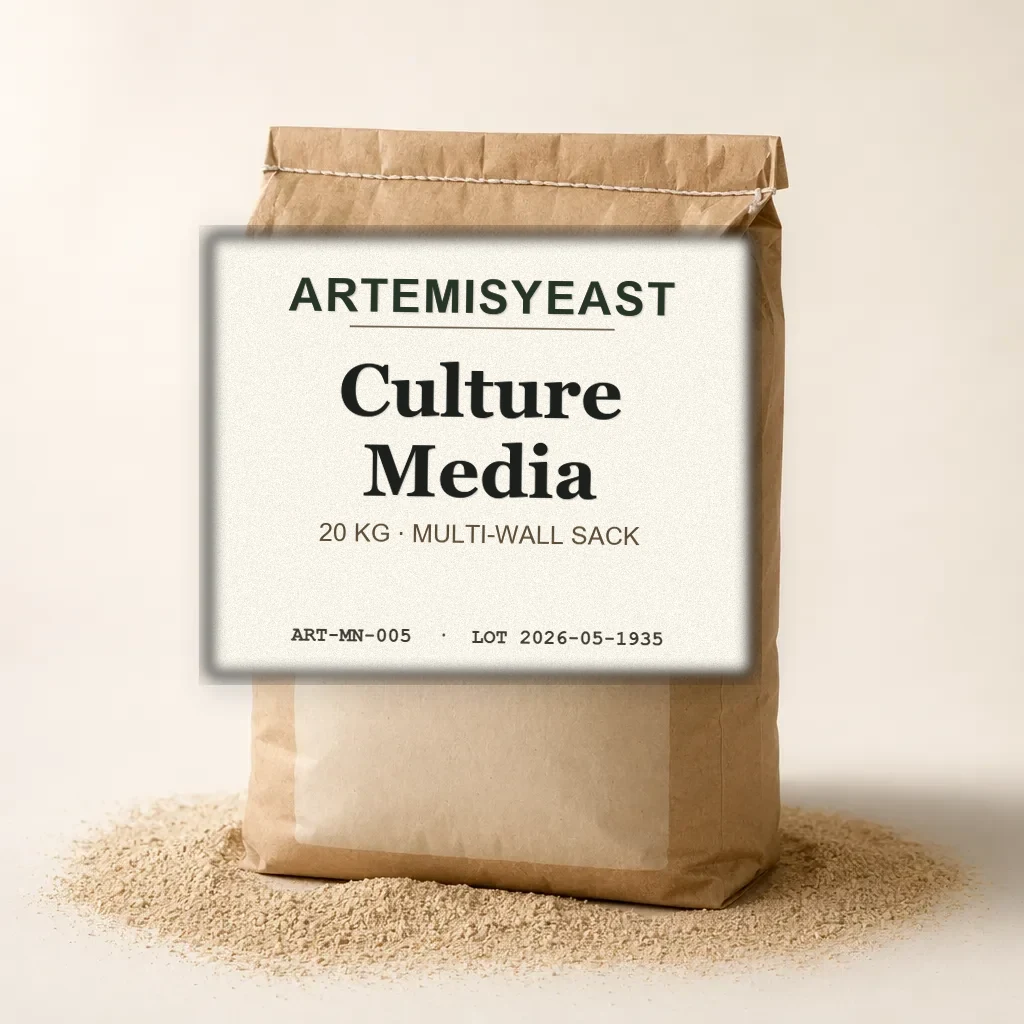
Dry Culture Media for Industrial Fermentation
Microbial nutrition input — culture media for industrial fermentation, cell culture, and biopharma upstream.
Request a Custom Quote
We have received your message. We will reply by email.