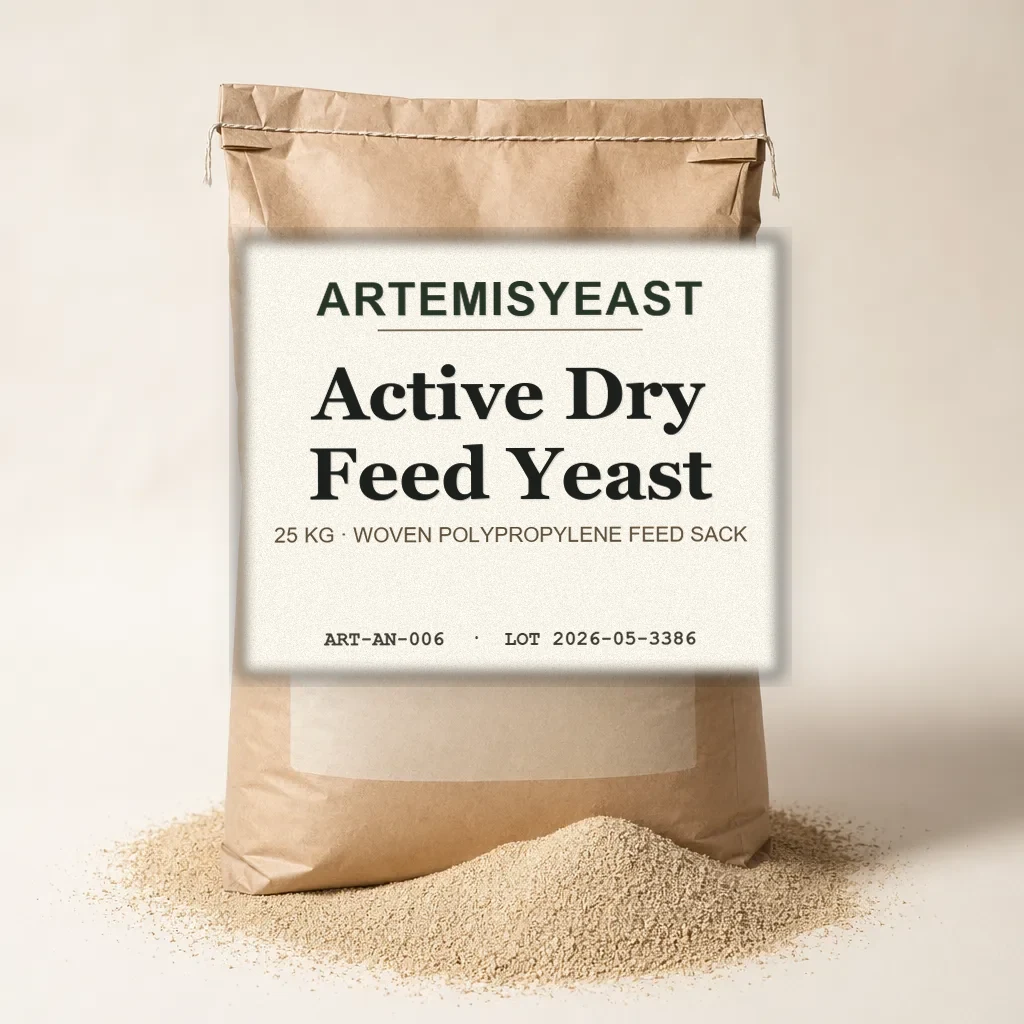
Active Dry Feed Yeast for Animal Feed
Active dry feed yeast is a feed-grade live Saccharomyces cerevisiae ingredient supplied in dried granular form for inclusion in livestock, poultry, swine, ruminant, and aquaculture rations. ArtemisYeast supplies ART-AN-039 for feed mills, premix blenders, integrators, and nutrition brands requiring stable bulk yeast with defined viability, moisture, and protein targets. The product is available in 25 kg woven polypropylene feed sacks, with wholesale pricing on request for pallet, mixed-container, and full-container procurement.
- ✓ Free worldwide shipping
- ✓ ISO-aligned manufacturing
- ✓ Certificate of Analysis on request
- ✓ Bulk & custom volumes quoted on request
Overview
ART-AN-039 is an active dry feed yeast designed for animal nutrition formulations where live yeast count, handling stability, and batch documentation matter. The material is typically specified as dried Saccharomyces cerevisiae granules with a viable count target of not less than 5×10^10 CFU/g at manufacture, moisture not more than 8.0%, crude protein typically 38-45% on an as-is basis, ash not more than 8.0%, and pH in water normally 4.0-6.5. Typical particle profile is free-flowing granules or fine granules suitable for direct feed, premix, and top-dress use; mesh distribution can be discussed for plant-specific dosing systems.
This product is positioned within our animal nutrition yeast range for compound feed and specialty nutrition manufacturers. Active dry yeast contributes microbial biomass, yeast-derived amino acids, B-vitamins, nucleotides, and cell wall fractions such as beta-glucans and mannan-oligosaccharides. It is not a vitamin premix or mineral premix; it is a yeast ingredient used by feed formulators as part of complete ration design. ArtemisYeast supplies bulk lots against technical specifications, with bulk quote on request for ART-AN-039 by destination, annual volume, and packaging plan.
Applications
- Ruminant feed: inclusion in dairy, beef, calf, sheep, and goat formulas where formulators require a live yeast source compatible with total mixed ration, concentrate, or mineral feed systems.
- Swine nutrition: use in starter, grower, finisher, and sow feeds as a yeast-based functional ingredient with defined CFU/g and protein contribution.
- Poultry feed: suitable for broiler, layer, breeder, duck, and turkey feed programs, including premix blending and direct compound feed manufacturing.
- Aquaculture feed: applicable in fish and shrimp feed lines where yeast biomass and cell wall components are used in extruded or pelleted diets, subject to heat exposure validation.
- Feed premixes and concentrates: compatible with carriers such as soybean meal, wheat middlings, rice hull powder, calcium carbonate, and other dry premix bases when moisture and temperature are controlled.
- Private-label feed additives: available for distributors and nutrition companies requiring neutral bulk supply, documentation, and export-ready sack configuration.
Storage and Handling
Store ART-AN-039 in a cool, dry, well-ventilated warehouse away from direct sunlight, condensation, steam lines, and strong odors. Recommended storage is below 25 °C with relative humidity below 65% where practical. Keep sacks sealed until use, and reseal partial sacks promptly to limit moisture uptake. Under recommended storage conditions, typical shelf life is up to 24 months from manufacture; viability should be verified by CoA and retested if the product is exposed to high heat or long storage.
The standard pack is a 25 kg woven polypropylene feed sack with an inner liner or equivalent moisture barrier, subject to order specification. Use dust-control practices during unloading, bag dumping, and premix charging. For pelleting or extrusion, nutritionists should validate live yeast survival under their own conditioning temperature, retention time, moisture, die pressure, and post-pellet cooling conditions. Add-on after heat treatment is preferred when maximum viable count in finished feed is required.
Quality and Documentation
ArtemisYeast supplies ART-AN-039 under feed ingredient controls with batch traceability, incoming raw material review, in-process checks, and finished-product testing. A typical certificate of analysis can include viable yeast count, moisture, crude protein, ash, sensory appearance, and microbiological indicators such as total plate count, coliforms, mold, yeast identity, and absence targets for relevant pathogens according to the agreed specification. Heavy metals, mycotoxin screen, and dioxin/PCB testing can be arranged where required by destination market or customer protocol.
Documentation is available through our quality documentation process, including CoA, technical data sheet, safety data sheet where applicable, allergen statement, GMO status statement, feed-grade declaration, and country-of-origin documentation. HACCP-aligned production records and certification documents such as ISO 22000, FSSC 22000, Halal, or Kosher may be provided when applicable to the manufacturing site and shipment lot. Final compliance review should be completed by the importer or feed operator against local feed regulations before use.
About this product
What is the typical shelf life?
Do you offer documentation (CoA, food-grade declaration)?
What is the minimum order quantity?
Is bulk pricing available?
How is this product shipped internationally?
More from Animal Nutrition Yeast
Feed-Grade Yeast Cell Wall for Animal Nutrition
Feed-grade yeast cell wall for livestock, poultry, ruminant, swine, and aquaculture nutrition.
Feed Yeast AGP Alternative for Animal Nutrition
Feed-grade antibiotic(agps) alternative for livestock, poultry, ruminant, swine, and aquaculture nutrition.
Feed-Grade Mycotoxin Binder for Animal Nutrition
Feed-grade mycotoxin binder for livestock, poultry, ruminant, swine, and aquaculture nutrition.
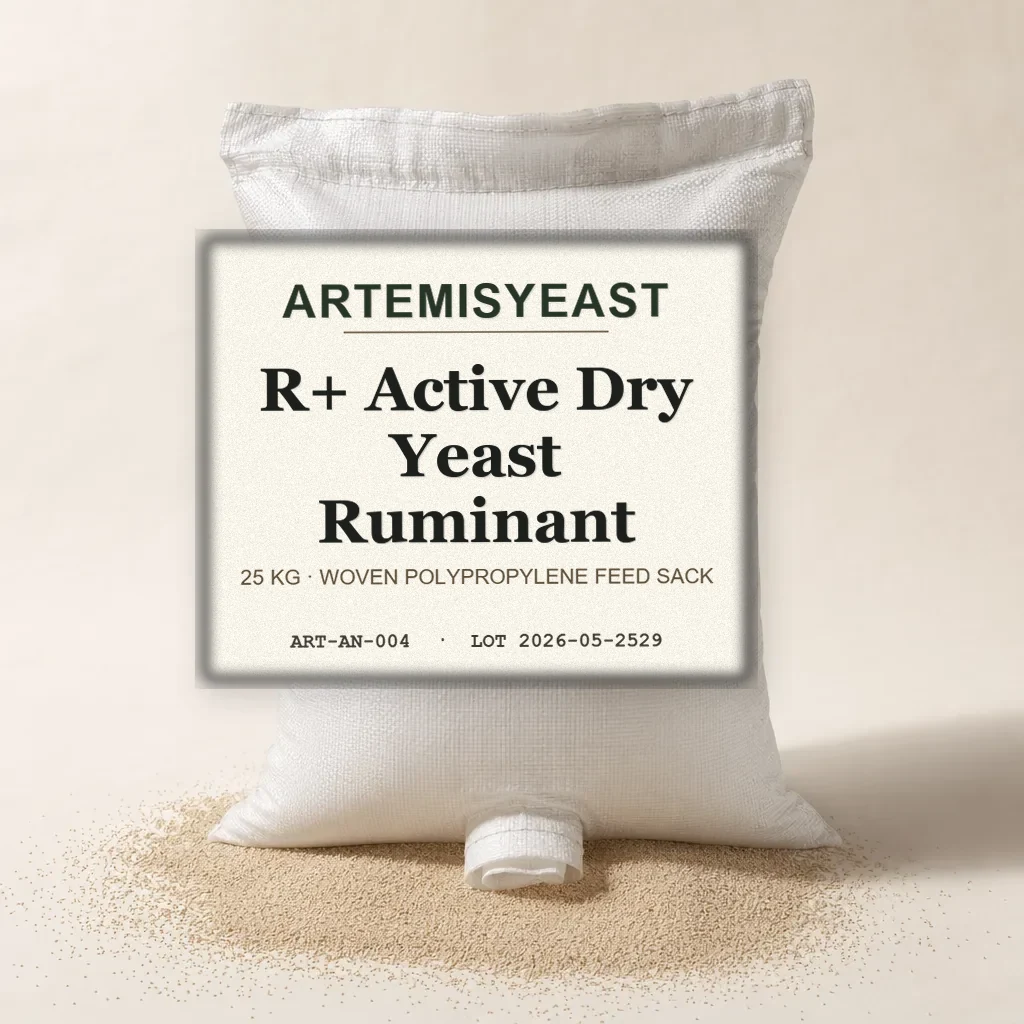
Ruminant Active Dry Yeast for Animal Feed
Feed-grade r+ active dry yeast ruminant for livestock, poultry, ruminant, swine, and aquaculture nutrition.
Request a Custom Quote
We have received your message. We will reply by email.