Yeast Extract vs MSG for Clean-Label Umami Reformulation
Yeast extract vs MSG is a reformulation decision about how to deliver umami, savory depth, and label acceptance in processed foods. MSG is a single purified ingredient, while yeast extract is a food ingredient made from yeast solids containing amino acids, peptides, nucleotides, minerals, and other savory compounds. For B2B buyers, the right choice depends on label targets, flavor profile, sodium limits, cost-in-use, application conditions, and documentation requirements. ArtemisYeast supports food manufacturers comparing direct MSG replacement, partial reduction, or layered flavor systems using bulk yeast extract grades for soups, sauces, snacks, seasonings, plant-based foods, and ready meals.
Need a quote or specifications? Email info@artemisyeast.com or use the quote form — our team replies within one business day with availability, documentation, and bulk pricing.
What this category/application covers
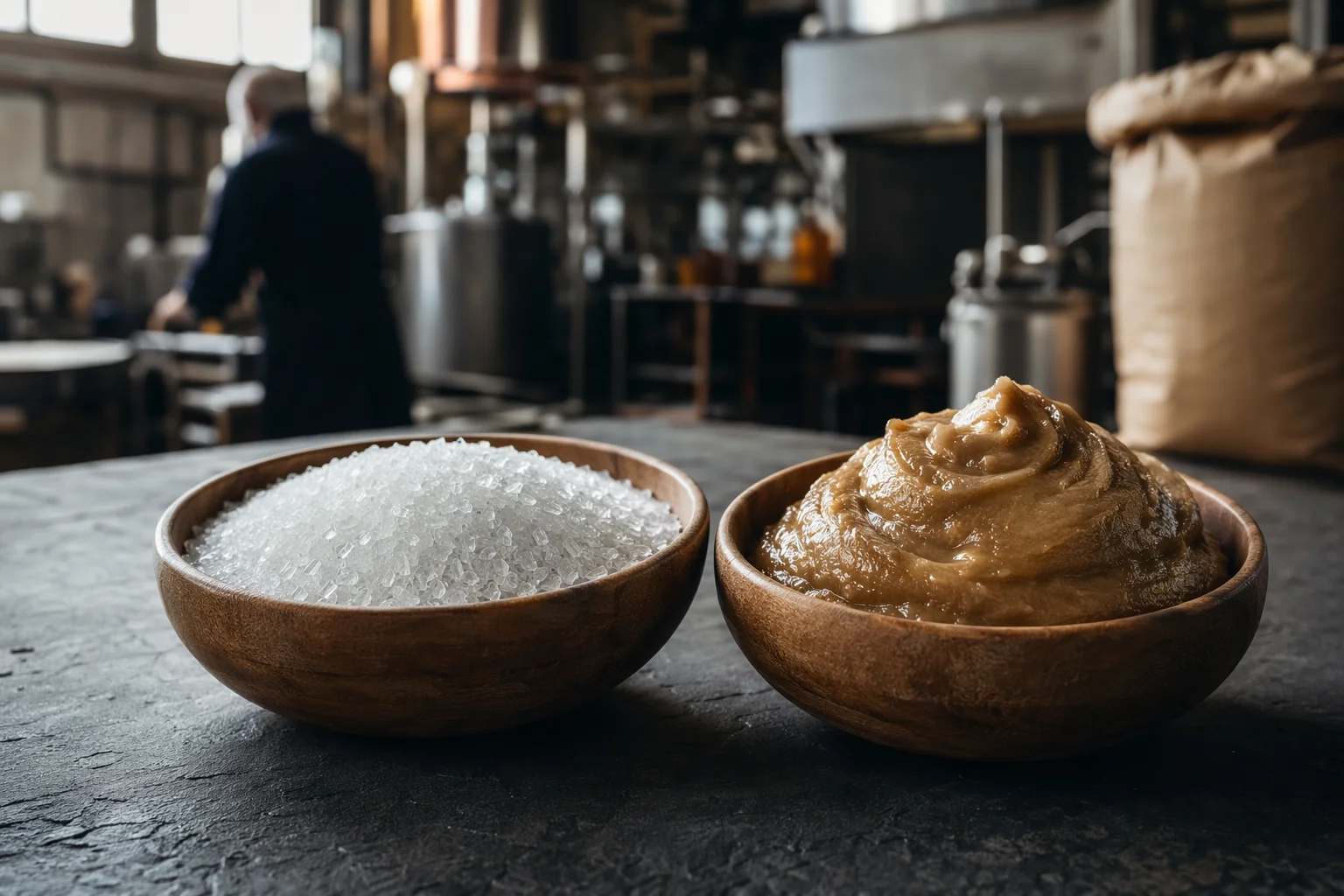
This buyer guide covers how food manufacturers compare yeast extract with monosodium glutamate for clean-label umami reformulation. MSG gives a direct glutamate impact with high consistency and simple dosing. Yeast extract can contribute glutamate, nucleotides, roasted notes, brothy character, mouthfeel, and background complexity, making it useful when the brief requires a more familiar ingredient declaration or a broader savory profile.
Procurement teams typically evaluate this change when a retailer brief, export market, brand standard, or R&D roadmap calls for reduced reliance on added MSG. The goal is not always a one-to-one replacement. Many teams use yeast extract to reduce MSG, round harsh saltiness, strengthen meat or vegetable notes, or improve flavor continuity after sodium reduction. Explore our yeast extract category and savory food applications for ingredient options.
| Decision factor | MSG | Yeast extract |
|---|---|---|
| Label position | Declared as monosodium glutamate or MSG | Typically declared as yeast extract, subject to local rules |
| Flavor effect | Clean, direct umami | Umami plus brothy, roasted, meaty, or fermented notes |
| Dosing approach | Low, precise addition | Application-led tasting and pilot validation |
| Sodium impact | Contains sodium | Varies by grade; low-sodium options may be available |
| Best use | Simple umami boost | Clean-label flavor building and complexity |
The difference between the two ingredients starts with how yeast extract is made. Yeast cells are opened with a purpose-built enzyme preparation at a set temperature and pH, and the proteins of the cell are broken down into a mixture of amino acids, nucleotides and other savoury compounds; that mixture is the yeast extract. The raw material is beer yeast or bread yeast, and the base yeast is the first thing that shapes the taste. The older route is autolysis, where the yeast's own enzymes do the work. Plants on the enzymatic route report a more thorough hydrolysis under mild conditions and better use of their equipment.
Common products and formulations
- Standard yeast extract powders: versatile grades for bouillons, sauces, soups, instant noodles, snacks, and seasoning blends where balanced umami and water dispersibility are required.
- High-nucleotide yeast extracts: selected when formulators need stronger umami synergy and a lower use level than mild savory grades.
- Low-sodium yeast extracts: useful in sodium reduction projects where the target is flavor retention without simply adding more salt.
- Roasted or meaty profile extracts: chosen for meat snacks, gravies, plant-based proteins, marinades, and fillings where background character matters.
- Blended savory systems: customized mixtures of yeast extract, salt, sugar, vegetable powders, and flavor carriers for factories seeking faster production trials. Review our bulk product range for available formats.
Four things make two yeast extracts differ, whatever the grade name says:
- Base yeast: beer yeast or bread yeast.
- Whether the yeast RNA is broken down: this is where the nucleotide umami comes from, and it is the reason high-nucleotide grades exist.
- Amino-acid content: a hydrolysate high in amino acids is reported to taste rich and mellow, with a strong savoury effect.
- Particle size and solubility: the material is a water-soluble powder, and the mesh size can be made to order.
Mild process conditions are reported to leave less off-flavour in the finished extract.
How to choose
Start with the label objective. If the finished food can declare MSG and only needs sharp umami, MSG may remain cost-efficient. If the commercial brief requires a shorter or cleaner-looking ingredient list, yeast extract is often the preferred route. Next, define whether the project is full replacement, partial replacement, or flavor repair after salt reduction. These are different technical tasks and require different grades.
Evaluate cost-in-use rather than price per kilogram. Yeast extract may dose higher than MSG, but it can also replace part of a flavor base, reduce top-note dependency, or improve taste continuity after processing. Run benchtop trials at several inclusion levels, then confirm in pilot production because heat, pH, fat level, starch systems, and drying conditions affect final perception. For complex briefs, request a custom quote that includes application, target label, annual volume, packaging size, and required documentation.
The common mistake is to compare two extracts by the figures on their spec sheets. The same hydrolysis job is specified by different makers at enzyme doses several times apart, with different temperature and pH windows. Process figures from one supplier are therefore not comparable with another's, and the makers themselves say the dose depends on the substrate, its concentration and the reaction conditions. Ask for the trial result in your own product, not for a figure. One caution is worth passing to your supplier: the hydrolysis is inhibited by oxidants and helped by reducing substances, so a change in raw material or process aids can shift the taste from batch to batch. The same enzyme types also serve yeast hydrolysate for feed and yeast-based culture media, so confirm that the grade you are offered is made for food.
Quality and documentation
Procurement should confirm specification limits, country of origin, allergen statement, ingredient declaration guidance, microbiological criteria, heavy metal limits, shelf life, packaging, and storage recommendations. R&D teams should also request sensory descriptions, suggested use ranges, solubility information, and compatibility notes for dry blends or liquid systems.
ArtemisYeast can provide documentation packs for qualified B2B inquiries, including specification sheets and lot-level quality records where applicable. Visit quality and documentation for our approach to supplier qualification, traceability, and export-ready paperwork.
Put four questions to any yeast extract supplier: which base yeast is used, whether the extract is made by autolysis or by enzymatic hydrolysis, whether the RNA is broken down, and what the particle size and solubility are. The specification should also name the standard the product is made to. A replacement ratio for MSG, the glutamate and nucleotide content of each grade and a salt-reduction figure are not printed here; we give a trial range after your brief.
Why work with ArtemisYeast
- Application-led sourcing: we match yeast extract grades to the finished food, not just to a generic product name.
- Bulk procurement focus: we support carton, bag, pallet, and container-level requirements for food factories, seasoning houses, and co-packers.
- Reformulation support: we help compare MSG reduction, full replacement, and blended umami systems for practical plant trials.
- Inquiry-only pricing: wholesale pricing is provided on request based on grade, volume, packaging, destination, and documentation needs.
- Clear next step: send your application brief through bulk quote request and ask for matching samples, specifications, and lead-time details.
Email us a taste brief with the product, the current MSG or salt level, the target label wording and the process step, and ask for a sample: we reply with grade options and a suggested trial range.
Common questions
Can yeast extract replace MSG one-to-one?
Is yeast extract considered clean label?
Does yeast extract contain glutamate?
When is partial MSG replacement better than full replacement?
Which applications benefit most from yeast extract?
What information is needed for a bulk inquiry?
Can ArtemisYeast supply samples before bulk purchasing?
How is pricing handled?
Is yeast extract vegan?
Why do two yeast extracts taste different at the same dose?
How is yeast extract made?
Questions about yeast extract vs MSG?
Our team can recommend specific products and share documentation tailored to your application.